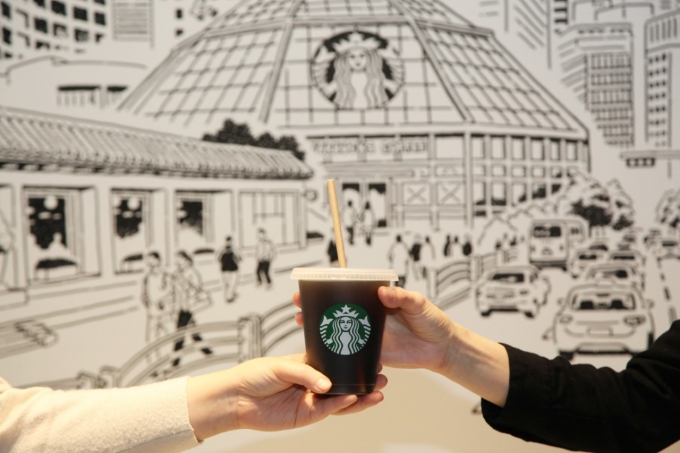
Disposable cups are expected to disappear from all Starbucks stores in Korea by 2025.
Starbucks Coffee Korea announced its mid- to long-term sustainability strategy for 2025, including the suspension of the use of disposable cups last month, “Better Together: A Valuable Together” project. It is designed to grow together by communicating with customers and communities for a sustainable future under the theme of environment, win-win, and recruitment.
Starbucks’ mid- to long-term sustainability strategy will be based on the “Planet,” which aims to reduce carbon by 30%, and the “People,” which aims to expand employment by 30%.
It is planning to gradually introduce reusable cups instead of disposable cups in order to reduce disposable products in stores across the country. It announced that it will select a pilot store in the second half of this year and introduce and operate a reusable cup. Instead of disposable cups, the pilot store provides customers with a certain amount of deposit. It is a system in which deposit is returned if the used cup is returned through an unmanned return machine at a reusable cup store. The same system is being tested at a store in Seattle, where Starbucks headquarters is located.
The plan is to expand the category of related products by continuously developing vegetable drinks, food products and alternative meat ingredients. The goal is to expand the related customer experience as interest in carbon-reduction effects and health-conscious foods is also increasing interest in food.
It will also strengthen its product lineup using local specialties to strengthen co-prosperity through cooperation with farmers. Starbucks has been steadily developing and releasing Shintobul beverages such as “Gwangyang Hwangmaesil Fizio,” “Princess Bonibam Latte” and “Icheon Heapsal Latte” starting with “Mungyeong Omija Fizio” in 2016. This year, the company said it will speed up development with the goal of releasing five new beverages using Korean agricultural products and increase the scope of development every year to up to 10 by 2025.
Starbucks will greatly expand recruitment by 2025, contributing to job creation, especially strengthening support for jobs for the vulnerable, such as disabled, middle-aged, and career-broken women, and aims to hire about 10% of all executives and employees from vulnerable groups by 2025. Starbucks currently has 708 disabled partners (based on the number of legal disabilities) and 160 return mom baristas through a career-interrupted women’s reemployment support program.
“Starbucks’ decision to end the use of disposable cups and implement reuse programs in Korea is the approach we’ve been waiting for,” Greenpeace USA Marine Campaign Director John Rocheva said in a statement.